ROBOTS AND AI IN EVENT PLANNING: TIPS FOR CREATING ENGAGING EVENTS

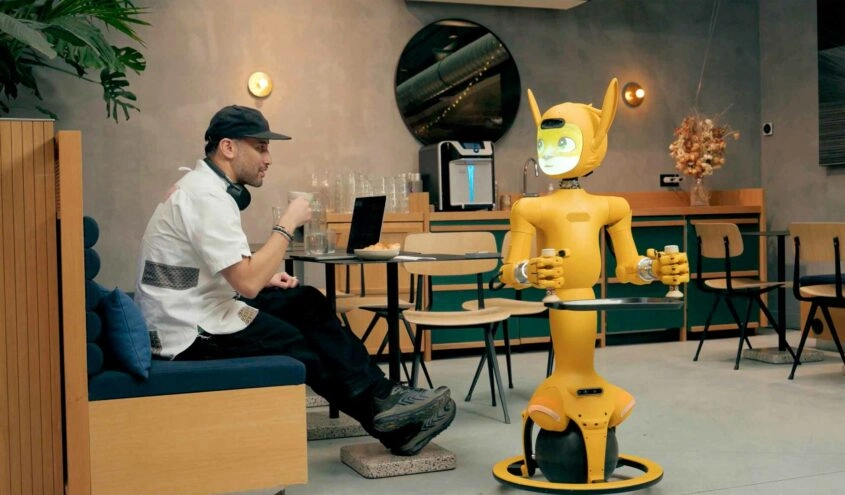
Long viewed as futuristic gadgets, robots and artificial intelligence are now taking center stage in event strategies. No longer are they used simply to impress, but to optimize, personalize, and enrich the attendee experience.
In a climate where audiences expect events to be more seamless, engaging, and sustainable, technology is becoming a true driver of performance—provided it is thoughtfully designed.
An in-depth look with Oxygen’s events division.
Robots are no longer just there to attract attention. When properly integrated into an overall system, they now perform practical functions that enhance the user experience and support the organization.
Their strength lies in their ability to surprise while also being useful. Their limitations become apparent when they are deployed without a clear strategic intent.
Unlike robots, artificial intelligence isn’t always visible. Yet it is profoundly transforming the way events are designed, managed, and evaluated.
In the events industry, AI enables the analysis of data in advance to better understand participants’ expectations and tailor content accordingly. During the event, it can offer personalized recommendations for sessions, meetings, or activities, making the participant experience more relevant and engaging.
On the operational side, artificial intelligence helps optimize flows in real time, anticipate certain logistical challenges, and automate time-consuming tasks such as content generation and data processing. After the event, AI enables a detailed performance analysis and better planning for future editions.
It can be very tempting to incorporate a robot or an AI solution into event management simply because the technology is visible and trendy. However, without strategic planning, the system can become costly, complex to operate, and poorly understood by participants.
Technology should never be an end in itself. It must serve a concept, reinforce a narrative, and enhance the overall experience. When AI is integrated effectively, it supports creativity and performance. When it is poorly designed, it creates distance.
In the coming years, the hyper-personalization of attendee experiences will accelerate thanks to predictive data analysis. Communications professionals will increasingly rely on generative AI tools to create content and become more agile. Robots will be further integrated into event setups as true operational collaborators, and data will help optimize the environmental impact of events.
The focus will no longer be on the “wow” factor, but on the ability to demonstrate measurable value that aligns with communication objectives.
“Robots and AI should never be mere technological demonstrations. They must serve a concept, a narrative, or a strategic intent. When integrated effectively, they streamline the experience and strengthen engagement. When misused, they create distance. Our role is to strike the right balance between innovation, emotion, and performance.” — Caroline Masse, Head of the Oxygen Events Division
The future of event planning will be neither 100% technological nor 100% human.
Robots can handle certain logistical and interactive functions. Artificial intelligence optimizes, analyzes, and personalizes. But creativity, emotion, the ability to handle the unexpected, and the ability to build connections remain deeply human.
The most successful events of tomorrow will be those that can orchestrate this collaboration with intelligence and precision.
Would you like to integrate robots and AI into your next event in a strategic and experiential way?
Contact us to create an innovative, high-performing… and truly human experience.