Storyboard: Definition and Guide to Mastering It
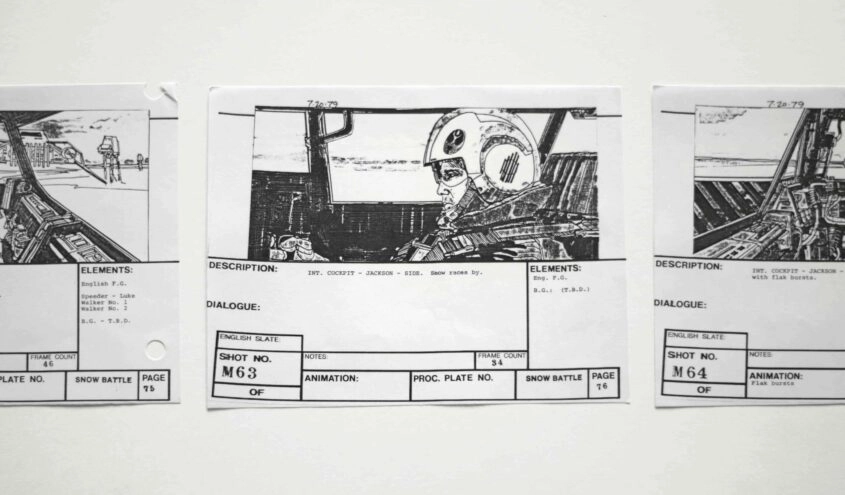
To understand a storyboard, think of it as a comic strip. It is a shot-by-shot visual representation of the written screenplay. It is used in filmmaking and video production in the broadest sense. The purpose of a storyboard is to bring the director’s vision to life. In a content strategy, it formalizes the brand’s intent, ensures compliance with the editorial guidelines, and structures the work of the creative teams.
In a landscape where communication increasingly relies on highly visual content, video production demands absolute precision. A study conducted by Adobe in France in 2025 confirms this trend: short-form video has now established itself as the preferred format and the primary source of engagement for 35% of respondents—a figure that rises to 45% among 18- to 24-year-olds. But to successfully make a lasting impression and effectively convey their brand identity in just a few seconds, brands must thoroughly prepare and plan ahead of the shoot.
This is where the storyboard comes in. Faced with budget constraints and the need for speed, it ensures that the brand’s DNA remains intact while guaranteeing technical feasibility by bringing a clear artistic vision to life. Mastering the intricacies of this tool has become an essential prerequisite before launching any video brand content campaign.
The primary purpose of a storyboard is to translate an abstract concept into a series of coherent visual compositions, taking into account the brand’s identity and its storytelling. Each panel in the document details specific technical and artistic elements:
According to expert Sébastien Vovau, who has worked on major productions such as *Rabbids* and *Runes*, each shot in a fast-paced video requires an average of 3 to 5 storyboards to achieve true narrative fluidity (CNC, National Center for Cinema and the Moving Image). This fluidity is essential for maintaining the audience’s attention and maximizing brand recall.
A storyboard is more than just an illustration exercise; this tool serves strategic and operational purposes for your brand:
A storyboard is the best way to ensure you stay within budget on your video projects. It allows you to balance creativity with technical realities. For example, staging a dense crowd is extremely expensive to produce, whether through live-action filming or 3D modeling. Planning the storyboard in advance helps you work around this challenge by choosing clever camera angles and using sound design (creating ambient sounds) to create the illusion of a large crowd without increasing costs. By simulating the film’s structure, you eliminate unpleasant surprises and avoid going over budget.
In the context of a collaboration between a brand and its communications agency, the storyboard serves as a visual contract. It provides a clear framework for management approval, avoiding the misunderstandings that can arise from simply reading a script. Furthermore, whether on location or in the studio, it instantly coordinates the work of the technical teams (editors, videographers, etc.) around a shared vision.
Recent reports conducted jointly by Afdas, the CNC and Audiens highlight a profound transformation in the video production and storyboarding sectors. With short-form formats becoming increasingly demanding in terms of direction and pre-editing, the time required to design a storyboard has increased significantly, rising from an average of 8 days to more than 13 days. To optimize this production process, the use of artificial intelligence is now at the center of discussions.
The emergence of general-purpose image-generation tools like Midjourney and storyboard-specific tools like StoryboardHero has sparked an ambition—particularly among some major Hollywood studios—to drastically reduce production costs and timelines through automation.
However, practical experience shows that the actual impact of AI remains mixed. Users face a critical lack of control over current tools when it comes to maintaining strict visual and narrative continuity from one shot to the next. The time required to “prompt” the AI and correct its errors often negates the time savings sought compared to a traditional, controlled workflow.
To date, AI serves more as a tool to quickly assist in storyboard creation than as a complete substitute. It allows for the establishment of initial visual concepts, but the precision essential to the technical feasibility of a shoot still relies on human intuition and expertise.
Whether you’re planning to create an advertising campaign, a brand video, or a series of content pieces for digital platforms, a storyboard is essential for ensuring the consistency and effectiveness of a visual project.
Our branding agency, Oxygen, along with its strategic consulting division, o3, will support you in bringing your video projects to life.